
Innovation - Blog, Innovation
What are Stretch Codes and Step Codes – and What New Energy Codes Have Come Online?
Share this article


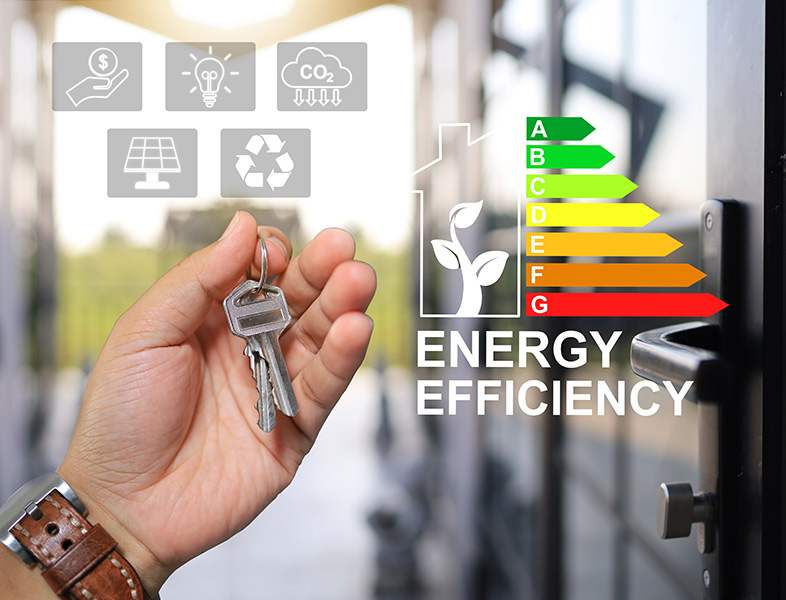
Energy codes in building and construction such as stretch codes and step codes have advanced significantly since the launch of ASHRAE 90-1975, the first national model energy standard in the U.S. for residential and commercial buildings. In fact, according to the U.S. Department of Energy, today’s model energy codes reduce energy use by more than 50% compared to the mid-1970s baseline.
But base energy codes represent only the starting point. Over the past decade, new voluntary and performance-based energy standards—often called stretch codes, reach codes, or step codes—have emerged across North America. These codes give jurisdictions, designers, and builders a roadmap to achieve higher levels of energy efficiency and lower carbon emissions.
What is an Energy Code?
An energy code is a regulation that establishes the minimum energy-efficiency requirements for new construction and major renovations.
Energy codes reduce utility costs and carbon emissions over a building’s lifespan by governing specifications such as:
- Building envelopes and facades
- Insulation levels
- Windows and glazing
- Heating, cooling, and ventilation systems
By improving control of heat gain and loss, these codes also enhance occupant comfort and overall building performance.
What is a Stretch Code?
A stretch code (or reach code) is an optional, locally adopted standard that goes beyond the base energy code. Communities that adopt stretch codes are effectively “stretching” toward higher energy efficiency sooner than required by the statewide or provincial baseline.
To demonstrate compliance, builders typically use energy-modeling software or work with sustainability consultants to project performance, followed by post-construction testing to verify results.
What is a Step Code?
A step code establishes a series of performance tiers that gradually increase efficiency requirements over time. Instead of prescribing specific construction methods, step codes are performance-based, meaning they set measurable energy targets. This flexibility lets builders choose the most cost-effective strategies to meet each performance level.
By providing an incremental pathway, step codes help jurisdictions transition toward advanced standards such as net-zero energy buildings or Passive House certification.
The most established example is the BC Energy Step Code in British Columbia, Canada. It includes multiple steps:
- Lower steps: Achievable with conventional methods
- Upper steps: Typically require integrated design, advanced construction techniques, and next-generation building materials
New Step Codes and Related Standards in North America
British Columbia, Canada
In 2023, B.C. introduced its Zero Carbon Step Code, a voluntary framework focused on cutting greenhouse gas emissions in new buildings. It defines four levels:
- EL-1: Measure-only performance
- EL-2: Moderate carbon performance
- EL-3: Strong carbon performance
- EL-4: Zero-carbon performance
United States
While the U.S. does not have a national step code, most states rely on the International Energy Conservation Code (IECC) or ANSI/ASHRAE/IES Standard 90.1 as their foundation. Increasingly, states and municipalities are layering in stretch-code elements:
- Massachusetts Specialized Opt-In Stretch Energy Code: A three-tier system updated in 2023, where jurisdictions must adopt the Stretch Code to qualify as a Green Community.
- New York NYStretch Energy Code-2023: An optional, stricter code that local governments can adopt, complemented by policies like the All-Electric Buildings Act.
- Illinois Stretch Energy Code (2025): Provides municipalities with a more efficient alternative to the state’s base code, which is based on the 2021 IECC.
Where Energy Codes Are Headed Next
The trajectory of energy regulation is clear: codes will continue to ratchet upward in stringency while broadening their scope beyond operational energy use. Some emerging directions include:
- Electrification: Many jurisdictions are moving toward all-electric building requirements to phase out fossil fuels for heating and hot water.
- Embodied Carbon: Future codes may begin accounting for emissions associated with construction materials themselves, not just energy consumed during operation.
- Resiliency and Climate Adaptation: Codes are expected to evolve to address climate resilience, including passive survivability during power outages and extreme weather.
- Net-Zero Targets: More regions are setting timelines to require net-zero energy or net-zero carbon buildings by 2030 or 2050, aligning with climate action goals.
For architects, designers, and builders, this means that today’s voluntary stretch or step codes often preview tomorrow’s baseline requirements.
How Unicel Architectural Helps You Meet Advanced Energy Codes
Unicel Architectural’s engineered facade solutions—including our timber curtain wall systems and award-winning Vision Control® insulating glass units with integrated louvers—help architects and builders align with today’s evolving code landscape.
Whether you’re targeting baseline compliance or aiming to achieve advanced stretch and step-code standards, Unicel Architectural’s products deliver durability, energy efficiency, and design flexibility.
Contact us today to learn how we can support your next project.
News and Updates
The latest from Unicel Architectural
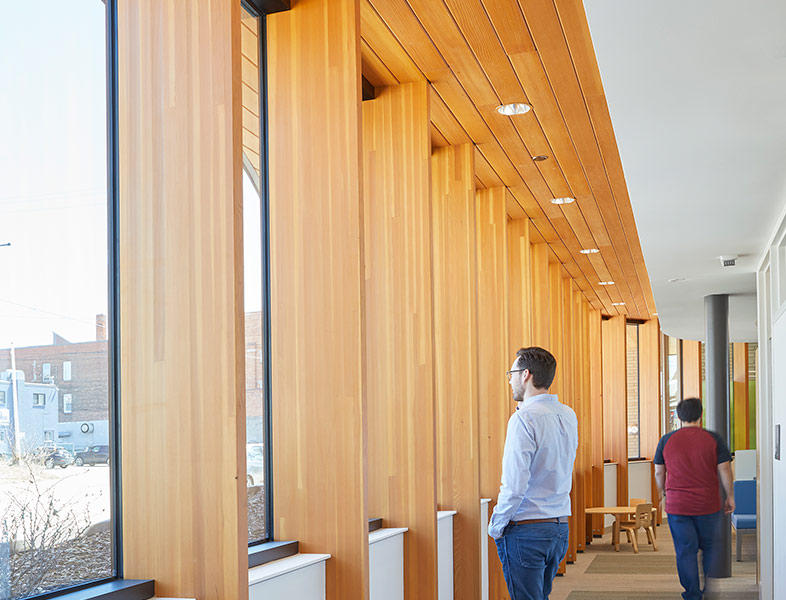
Timber Curtain Wall Systems for Institutional Buildings
Product Spotlight - Product Spotlight
Cyber-Physical Security: The New Frontier of Risk in the Built Environment
Articles - Articles, Blog, Innovation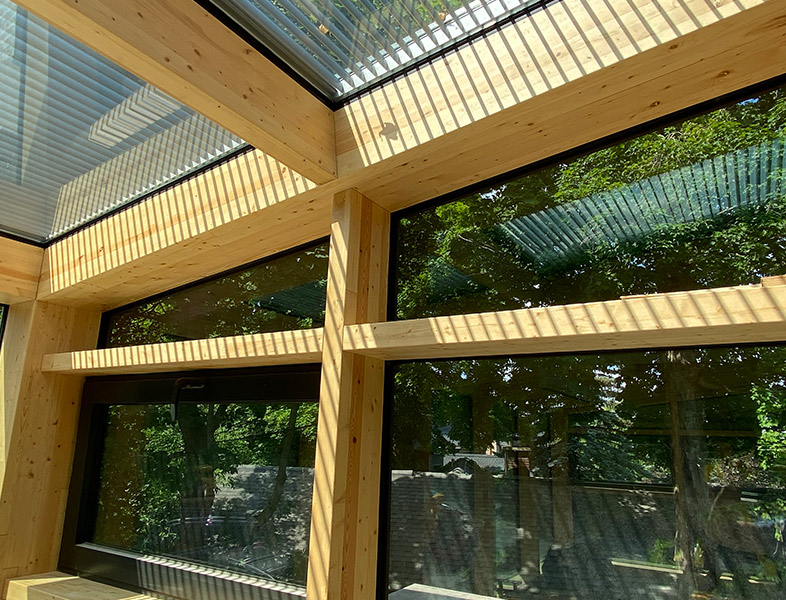
Integrating Vision Control® into Timber Curtain Wall Assemblies
Product Spotlight - Product Spotlight
