
Articles - Articles, Blog, Innovation
Smart Infrastructure and Structural Health Monitoring: Data-Driven Resilience in the Built Environment
Share this article


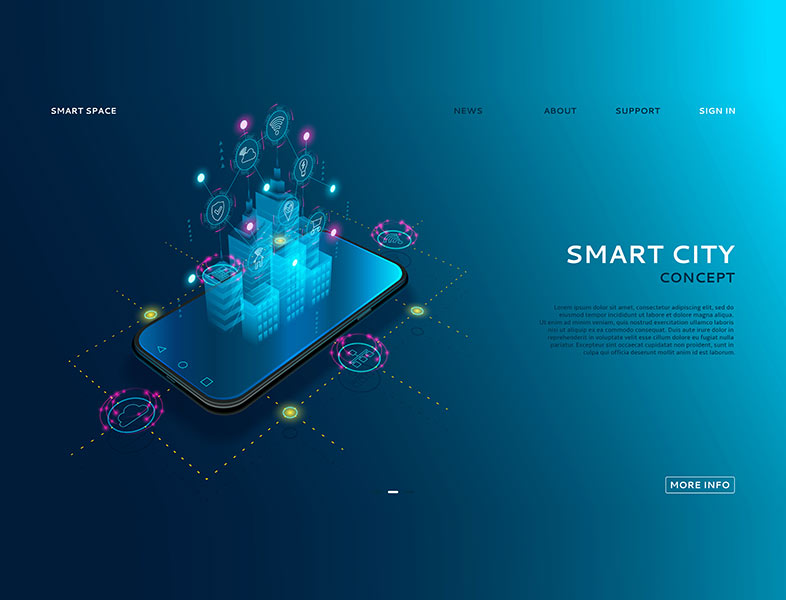
As infrastructure assets age and climate-related stresses increase, the Architecture, Engineering, and Construction (AEC) industry is under growing pressure to deliver buildings and systems that are not only efficient, but resilient over time. Smart infrastructure and Structural Health Monitoring (SHM) are emerging as critical tools in meeting this challenge—enabling continuous insight into asset performance and supporting proactive decision-making across the building lifecycle.
Rather than relying solely on periodic inspections, smart infrastructure leverages sensors, data analytics, and connected systems to monitor structural behavior in near real time.
Understanding Structural Health Monitoring
Structural Health Monitoring refers to the use of embedded or attached sensors—such as strain gauges, accelerometers, displacement sensors, and environmental monitors—to track the condition of structures over time. These systems collect data related to load, vibration, movement, temperature, and material behavior.
According to research published in Structural Control and Health Monitoring, SHM allows engineers to detect anomalies, assess degradation, and identify potential failures earlier than traditional inspection methods.
In building and infrastructure applications, this data becomes the foundation for smarter maintenance strategies and improved long-term performance.
The Role of Smart Infrastructure
Smart infrastructure expands SHM beyond isolated monitoring by integrating sensors with data platforms, analytics engines, and visualization tools. This connectivity allows stakeholders to interpret performance trends, compare real-world behavior to design assumptions, and respond more effectively to emerging risks.
The U.S. Federal Highway Administration (FHWA) highlights that smart monitoring systems improve asset management by supporting condition-based maintenance rather than reactive repair.
For complex buildings and façade systems, this approach provides valuable insight into how materials and assemblies perform under real environmental conditions.
AI and Data Analytics in SHM
As sensor networks generate larger datasets, artificial intelligence is increasingly used to interpret SHM data. Machine learning models can identify patterns, filter noise, and flag deviations that may indicate structural issues.
Research from the Massachusetts Institute of Technology (MIT) demonstrates that AI-enhanced SHM improves damage detection accuracy while reducing false positives in large monitoring systems.
When combined with digital models, SHM data can feed into predictive maintenance strategies—supporting informed decisions about repair, retrofit, or replacement.
Lifecycle Benefits for AEC Stakeholders
Smart infrastructure and SHM offer value across all phases of the building lifecycle:
- Design validation: Comparing monitored performance with design assumptions
- Construction verification: Confirming structural behavior during staging and load transfer
- Operations and maintenance: Enabling proactive, condition-based maintenance
- Risk management: Supporting early detection of structural or system anomalies
The International Association for Bridge and Structural Engineering (IABSE) emphasizes that SHM supports resilience by improving understanding of how structures respond to long-term stressors and extreme events.
Integration with Digital Twins
SHM data is increasingly being integrated into digital twins, creating dynamic representations of physical assets. These models evolve over time, reflecting actual performance rather than static design assumptions.
According to the Centre for Digital Built Britain, this integration enables better asset stewardship and supports sustainability and resilience objectives at scale.
For building owners and designers, this convergence transforms infrastructure from a fixed asset into a continuously informed system.
Looking Ahead
Smart infrastructure and SHM represent a shift from reactive maintenance to proactive resilience. By embedding intelligence into buildings and structures, the AEC industry can better anticipate challenges, extend asset life, and improve safety.
As data becomes central to infrastructure performance, firms that integrate monitoring, analytics, and lifecycle thinking will be best positioned to deliver resilient, future-ready built environments.
News and Updates
The latest from Unicel Architectural
Timber Curtain Wall Systems for Institutional Buildings
Product Spotlight - Product Spotlight
Cyber-Physical Security: The New Frontier of Risk in the Built Environment
Articles - Articles, Blog, Innovation
Integrating Vision Control® into Timber Curtain Wall Assemblies
Product Spotlight - Product Spotlight
