
Product Spotlight - Product Spotlight
Vision Control® Systems for Correctional Facilities
Share this article


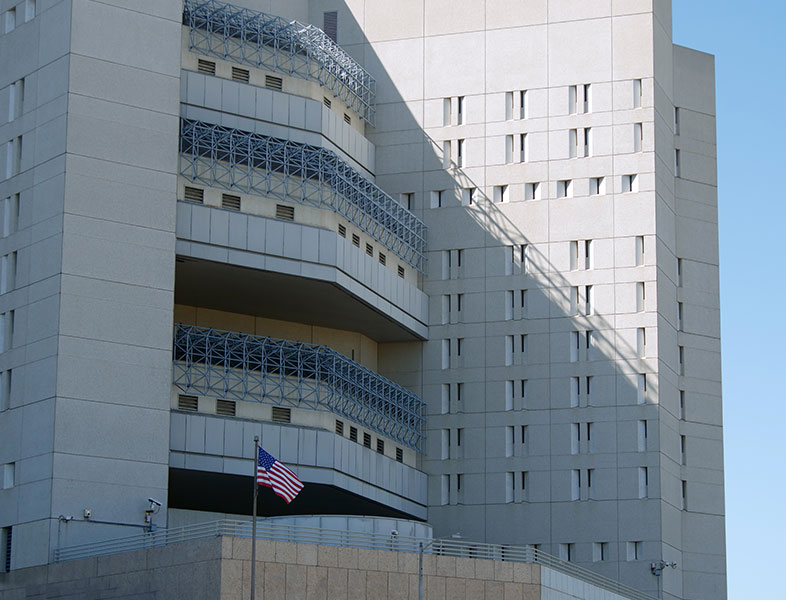
Correctional facilities present some of the most demanding design and operational requirements in the built environment. Architects and planners must balance security, safety, durability, and occupant management—often within highly constrained budgets and regulatory frameworks.
Unicel Architectural’s Vision Control® systems are designed to support these complex requirements by providing controlled visibility, robust construction, and long-term performance within secure institutional environments.
Balancing Visibility and Security
In correctional settings, visibility is a critical operational tool. Staff require clear sightlines to support supervision and safety, while privacy must be carefully managed to meet regulatory and humane design standards.
Vision Control® systems allow designers to modulate transparency at key locations—such as housing units, medical areas, interview rooms, and circulation zones—without relying on temporary or easily compromised solutions. By integrating vision control directly into the glazing assembly, facilities can achieve predictable performance and consistent detailing.
Designed for High-Abuse Environments
Correctional facilities demand products that can withstand sustained use, impact, and tampering. Vision Control® systems are engineered to support high-abuse institutional applications, helping reduce maintenance demands and long-term operational costs.
By eliminating the need for secondary blinds, films, or interior devices, Vision Control® supports a more secure and durable approach to managing visibility—particularly in areas where safety and reliability are paramount.
Supporting Operational Control and Staff Safety
Beyond physical durability, vision control plays a critical role in operational efficiency and staff safety. Controlled visibility helps reduce blind spots, supports behavioral monitoring, and contributes to safer working conditions for correctional officers and facility staff.
Integrating Vision Control® at the façade or interior partition level allows design teams to address these needs proactively, rather than retrofitting solutions after occupancy.
Coordination with Secure Glazing and Façade Systems
Correctional projects often involve specialized glazing, framing, and security requirements. Vision Control® systems can be coordinated with secure glazing assemblies, including laminated and impact-resistant glass, to support comprehensive security strategies.
Unicel works collaboratively with architects, consultants, and contractors to ensure that Vision Control® solutions align with broader façade and interior systems—supporting constructability, compliance, and long-term performance.
A Consistent, Maintenance-Conscious Solution
Facilities operated by public agencies place a high value on durability, predictability, and lifecycle performance. Vision Control® systems support these priorities by offering a consistent, integrated solution that minimizes moving parts and reduces maintenance complexity.
This approach helps correctional facilities maintain secure, functional environments over extended service lives.
Designed for Institutional Reliability
Correctional architecture demands products that perform reliably under pressure. By integrating controlled visibility directly into the building envelope and interior systems, Vision Control® supports safer, more manageable correctional environments.
Unicel Architectural’s Vision Control® systems help project teams deliver solutions that are secure, durable, and aligned with the operational realities of correctional facilities.
News and Updates
The latest from Unicel Architectural
Vision Control® Systems for Correctional Facilities
Product Spotlight - Product Spotlight
Robot-Ready BIM: Preparing Digital Models for Automated Construction
Articles - Articles, Blog, Innovation
Timber Curtain Wall Systems for Institutional Buildings
Product Spotlight - Product Spotlight
