
Articles - Articles, Blog, Innovation
AI and Point Clouds: Advancing Scan-to-BIM Workflows in AEC
Share this article


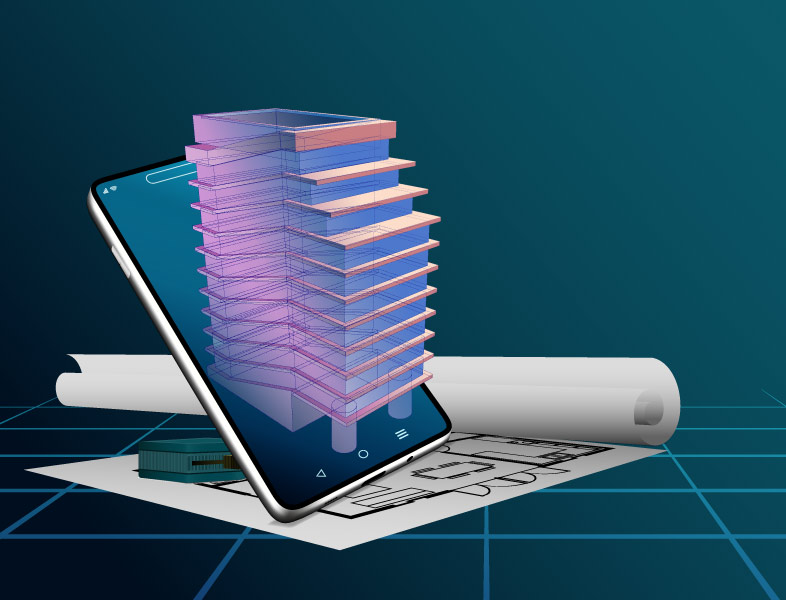
Reality capture technologies have transformed how existing buildings are documented, analyzed, and redeveloped. Laser scanning and photogrammetry now generate highly detailed point clouds that capture existing conditions with unprecedented accuracy. Yet as datasets grow larger and more complex, the challenge has shifted from data collection to data interpretation.
This is where artificial intelligence is beginning to redefine Scan-to-BIM workflows—helping AEC teams convert raw point clouds into usable, information-rich building models more efficiently and consistently.
From Manual Modeling to Intelligent Interpretation
Traditional Scan-to-BIM processes rely heavily on manual interpretation. Designers and modelers must visually inspect point clouds, identify architectural elements, and recreate geometry within BIM platforms. While accurate, this approach is time-intensive and subject to variation depending on experience and project complexity.
AI introduces a new layer of automation by using machine learning algorithms to recognize patterns within point cloud data. Research published in Automation in Construction demonstrates how AI can classify building elements such as walls, floors, columns, and openings directly from 3D scans, significantly reducing manual effort.
Rather than replacing modelers, AI acts as an accelerator—handling repetitive recognition tasks while professionals focus on validation and design intent.
Improving Accuracy and Consistency
One of the key advantages of AI-assisted Scan-to-BIM is consistency. Large point cloud datasets often include noise, occlusions, and varying levels of detail. AI models trained on architectural datasets can help normalize interpretation, reducing discrepancies across teams and projects.
According to research from the ETH Zurich Future Cities Laboratory, AI-driven geometry extraction improves repeatability in as-built modeling and reduces the risk of missing or misclassifying building elements in complex environments.
For renovation, adaptive reuse, and retrofit projects—where existing conditions directly influence façade design, structural integration, and system upgrades—this improved reliability is critical.
Enabling Faster Decision-Making
Speed is another significant benefit. AI-enhanced Scan-to-BIM workflows can shorten the time between site capture and actionable models, allowing teams to move more quickly into analysis and design development.
Faster access to reliable BIM models supports earlier performance evaluations, coordination with consultants, and informed decision-making. This is particularly valuable when assessing building envelope conditions, tolerances, and interfaces—areas where accuracy directly impacts constructability and long-term performance.
The U.S. National Institute of Standards and Technology (NIST) notes that intelligent data processing technologies play a key role in improving interoperability and efficiency across digital construction workflows.
Challenges and Governance Considerations
Despite its promise, AI-driven Scan-to-BIM is not without limitations. Models are highly dependent on training data quality and may struggle with unconventional geometry, historic structures, or highly customized architectural elements.
As with other AI applications in AEC, governance remains essential. Human review is required to verify outputs, validate assumptions, and ensure models align with project-specific requirements. AI should be treated as a decision-support tool, not an authoritative source.
Industry guidance from buildingSMART International emphasizes the importance of maintaining open standards and clear data validation processes when integrating automation into BIM workflows.
Implications for the Building Lifecycle
Beyond design and construction, AI-enabled Scan-to-BIM workflows support long-term building operations. Accurate digital representations of existing conditions form the foundation for digital twins, facility management, and lifecycle performance analysis.
As owners increasingly seek data-driven insights into asset performance, the ability to rapidly convert reality capture into structured BIM data becomes a strategic advantage.
Looking Ahead
AI is reshaping Scan-to-BIM not by eliminating human expertise, but by amplifying it. By reducing manual effort, improving consistency, and accelerating workflows, AI allows AEC professionals to focus on higher-value tasks—design quality, performance optimization, and strategic decision-making.
As reality capture continues to evolve, the integration of AI into point cloud interpretation will play a critical role in shaping more efficient, accurate, and intelligent AEC workflows.
News and Updates
The latest from Unicel Architectural
Timber Curtain Wall Systems for Cultural & Civic Buildings
Product Spotlight - Product Spotlight
Smart Contracts in AEC: Automating Trust in Project Delivery
Articles - Articles, Blog, Innovation
Unicel Architectural Timber Curtain Wall for Passive House & Low-Carbon Design
Product Spotlight - Product Spotlight
