
Articles - Articles, Blog, Innovation
Climate-Resilient Infrastructure: Designing for an Era of Uncertainty
Share this article


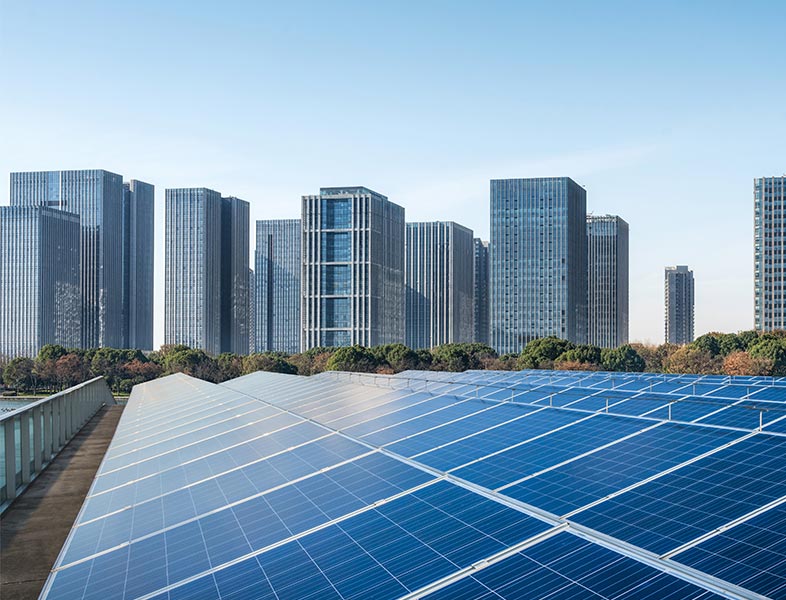
Climate change is no longer a future consideration for the built environment—it is a present condition shaping how infrastructure is planned, designed, and delivered. Across the Architecture, Engineering, and Construction (AEC) industry, climate-resilient infrastructure has emerged as a critical priority as projects face increasing exposure to extreme weather, environmental stress, and long-term uncertainty.
From flooding and heat waves to wildfires and freeze-thaw cycles, climate impacts are placing new demands on buildings and infrastructure systems that were often designed for historical conditions rather than future risk.
From Sustainability to Resilience
While sustainability has traditionally focused on reducing environmental impact, resilience emphasizes the ability of buildings and infrastructure to withstand, adapt to, and recover from disruption. The two concepts are closely related, but not interchangeable.
The National Institute of Building Sciences highlights that resilient design reduces not only physical damage but also downtime, economic loss, and social disruption following climate-related events.
For AEC professionals, this shift means expanding performance criteria beyond energy efficiency to include durability, adaptability, and recovery planning.
Why Climate Resilience Is Now a Design Imperative
Climate-related losses are rising at a pace that is reshaping risk assessment across public and private sectors. According to the World Economic Forum, climate risk consistently ranks among the top global threats to economic stability, with infrastructure vulnerability identified as a key concern.
Insurers, lenders, and public agencies are responding by demanding clearer evidence of climate resilience in capital projects. As a result, resilience considerations are increasingly influencing funding eligibility, permitting processes, and long-term asset valuation.
Infrastructure Under Stress
Infrastructure systems—transportation networks, utilities, public buildings, and civic facilities—are particularly exposed to climate risk due to their long service lives and critical societal roles.
The U.S. Federal Emergency Management Agency (FEMA) notes that resilient infrastructure investments yield measurable returns by reducing disaster recovery costs and improving community stability.
For AEC teams, this reinforces the importance of designing infrastructure that can perform under stress rather than simply meeting minimum code requirements.
Designing for Future Conditions, Not Past Data
One of the core challenges in climate-resilient design is that historical climate data is no longer a reliable predictor of future conditions. Engineers and planners must now account for uncertainty, variability, and compound risks.
Research from the Intergovernmental Panel on Climate Change (IPCC) emphasizes that infrastructure design must consider projected climate scenarios rather than relying solely on historical baselines.
This has direct implications for material selection, envelope performance, flood mitigation strategies, and system redundancy across building types.
The Role of Digital Tools and Modeling
Digital tools are increasingly central to climate-resilient infrastructure planning. Advanced simulation, digital twins, and scenario modeling enable project teams to test how assets perform under different climate conditions before construction begins.
The National Academies of Sciences underscore the value of predictive modeling in infrastructure resilience, particularly when combined with lifecycle analysis and risk assessment.
By integrating these tools early, AEC professionals can make more informed decisions about tradeoffs between upfront cost, long-term performance, and risk mitigation.
Resilience as a Cross-Disciplinary Effort
Climate resilience cannot be addressed by any single discipline. It requires collaboration across architecture, engineering, planning, operations, and policy.
The American Society of Civil Engineers (ASCE) emphasizes that resilient infrastructure depends on coordinated decision-making across design, construction, and asset management.
This reinforces the need for early alignment among stakeholders and a shared understanding of resilience objectives throughout the project lifecycle.
Building for a More Uncertain Future
As climate impacts intensify, resilience will become a defining measure of infrastructure quality. Projects that fail to account for future conditions risk accelerated degradation, increased maintenance costs, and reduced public trust.
For the AEC industry, climate-resilient infrastructure represents both a challenge and an opportunity—requiring new ways of thinking about performance, risk, and long-term value. By embedding resilience into design decisions today, project teams can help ensure that buildings and infrastructure remain functional, safe, and adaptable in an increasingly uncertain world.
News and Updates
The latest from Unicel Architectural
Specialty Skylights for High-Performance Buildings
Product Spotlight - Product SpotlightClimate-Resilient Infrastructure: Designing for an Era of Uncertainty
Articles - Articles, Blog, Innovation
Vision Control® Systems for Correctional Facilities
Product Spotlight - Product Spotlight
