
Articles - Product Spotlight
Vision Control® in Behavioral Health Facilities
Share this article


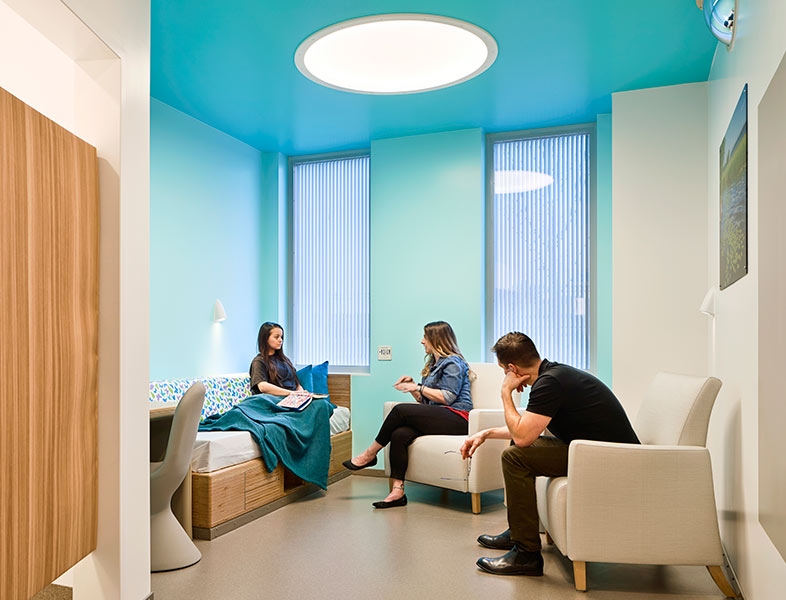
Designing for behavioral health environments requires a careful balance of safety, dignity, and therapeutic openness. Architects and designers must create spaces that support patient wellbeing while addressing heightened requirements for supervision, durability, and risk mitigation. Vision Control® offers a glazing solution that supports these goals by providing controlled visibility without sacrificing daylight or spatial connection.
Addressing the Needs of Behavioral Health Design
Behavioral health facilities place unique demands on building materials. Transparency is often necessary for observation and safety, while excessive openness can compromise patient privacy and comfort. Vision Control is designed to manage this tension by restricting direct sightlines while maintaining light transmission and visual continuity.
By limiting visibility from certain angles, Vision Control supports environments that feel open and calm—without exposing occupants to constant observation.
Key Features and Benefits
Vision Control delivers several advantages well suited to behavioral health applications:
- Directional visual control: Restricts direct views while allowing indirect visibility and daylight
- Enhanced safety: Laminated construction supports impact resistance and breakage containment
- Privacy with dignity: Reduces visual exposure without creating isolating or enclosed spaces
- Durability: Designed for demanding institutional environments
- Integration flexibility: Compatible with a variety of glazing systems and interior applications
These features allow designers to meet clinical, operational, and aesthetic requirements simultaneously.
Ideal Applications in Behavioral Health Facilities
Vision Control is commonly specified in spaces where patient safety and staff visibility must coexist. Typical applications include:
- Patient rooms and corridors
- Dayrooms and communal spaces
- Observation areas and nursing stations
- Consultation and therapy rooms
- Secure circulation zones
In these environments, Vision Control helps create spaces that feel less institutional while still supporting supervision and operational control.
Supporting Therapeutic Environments
Material selection plays a critical role in shaping the emotional and psychological experience of behavioral health spaces. Vision Control contributes to environments that feel calm, respectful, and human-centered, supporting design strategies that prioritize dignity and wellbeing alongside safety.
A Trusted Solution for Behavioral Health Design
Vision Control provides architects and healthcare designers with a reliable glazing solution that addresses the complex requirements of behavioral health facilities. By combining visual control, safety, and architectural clarity, it supports spaces that are secure, therapeutic, and thoughtfully designed.
News and Updates
The latest from Unicel Architectural

Large Language Models in AEC: Transforming Workflows, Not Replacing Expertise
Articles - Articles, Blog, InnovationVision Control® in Behavioral Health Facilities
Articles - Product Spotlight
AI Governance in AEC: Building Trust, Accountability, and Long-Term Value
Articles - Blog, Innovation
